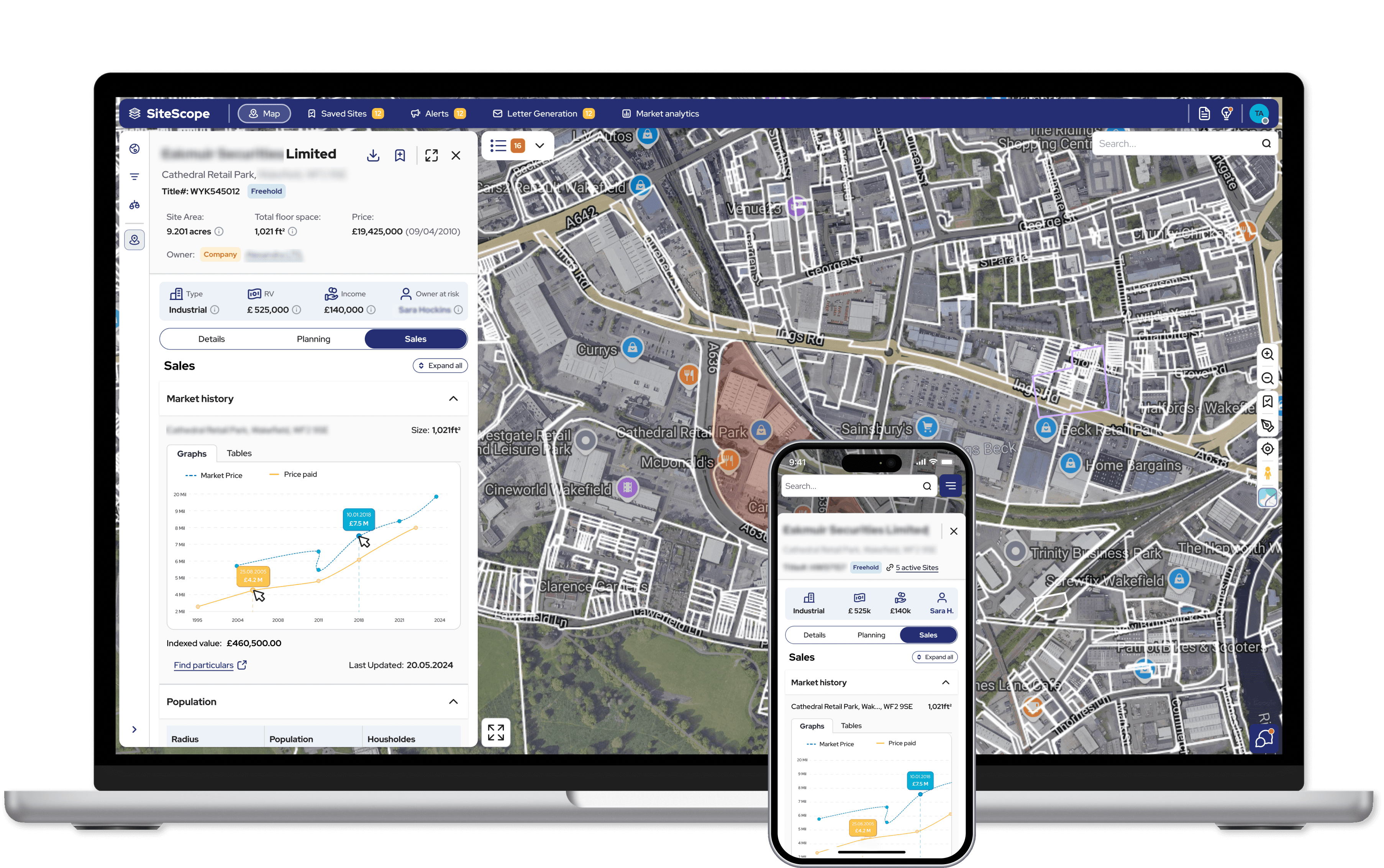
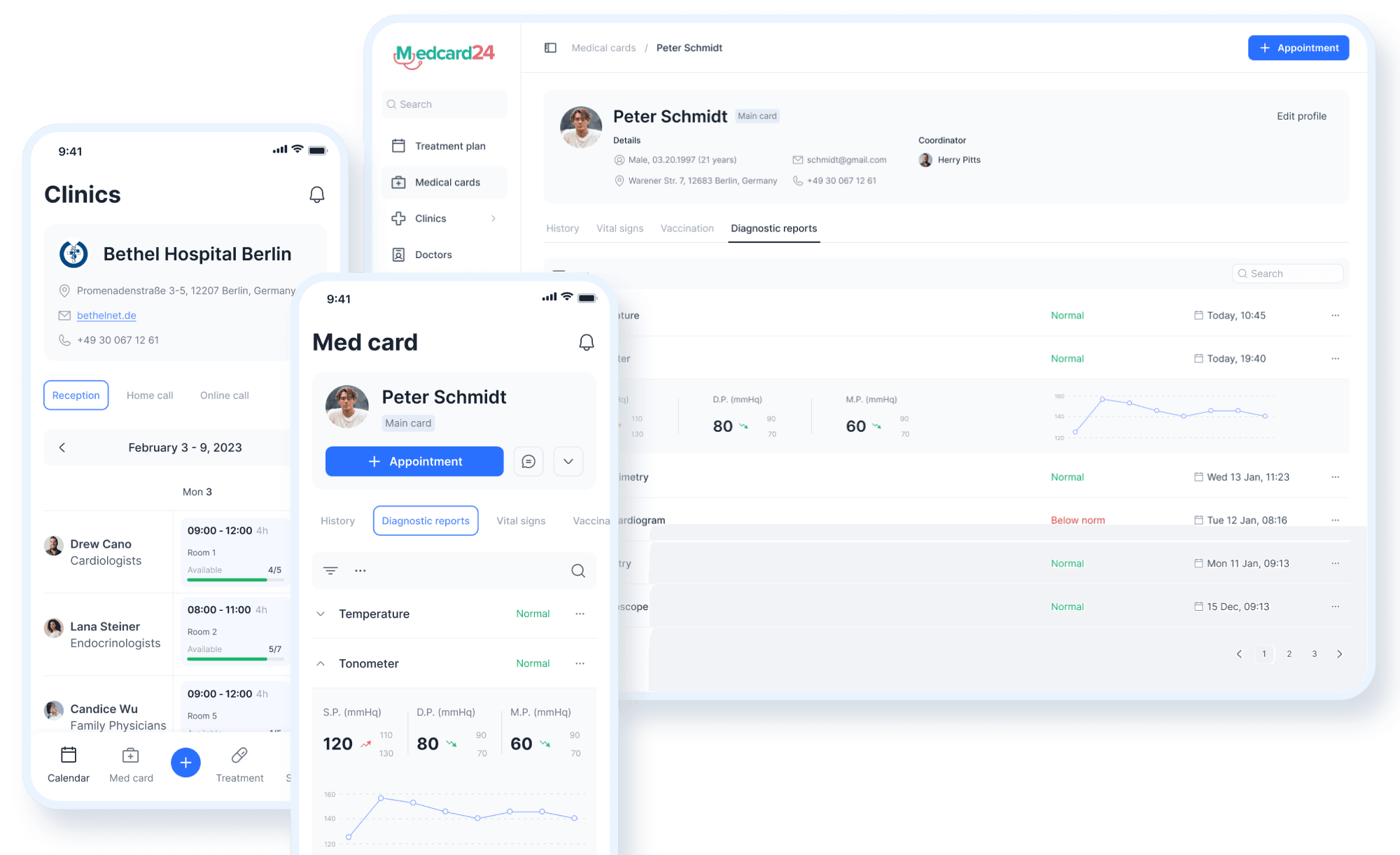
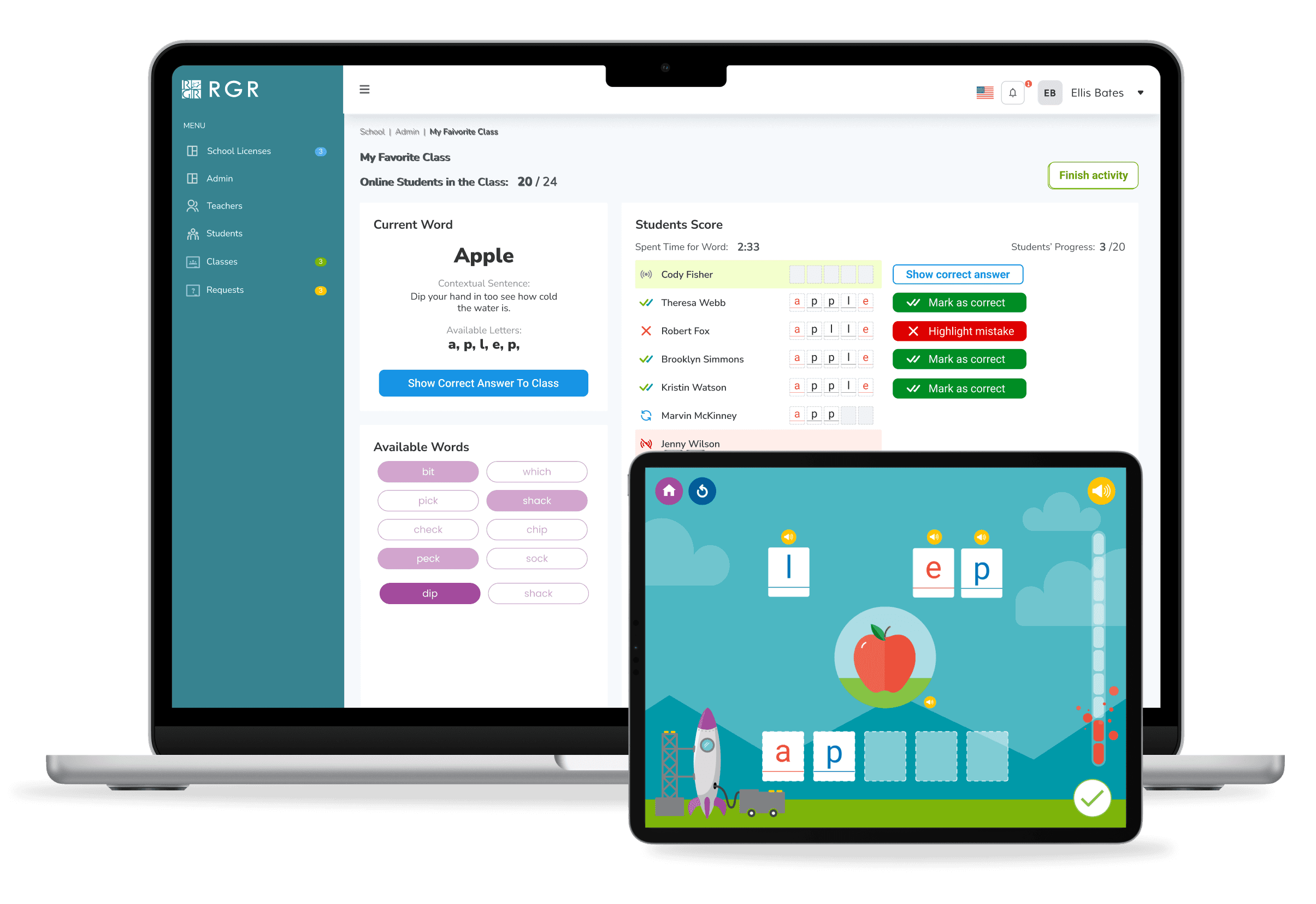
When COVID disrupted RGR’s print-based learning model, ~30% of schools paused their relationship with the programme. I turned a fixed digital vision into a validated product — redesigning the learning interaction, shaping the teacher experience, and using student and teacher evidence to influence the roadmap.
01 — Business Context
Business Context & Goals
RGR delivered its literacy methodology through printed worksheets, journals, and in-person teacher training for more than 15 years, reaching 257K students, 14K teachers, and 2.5K schools.
COVID disrupted in-person learning and accelerated the need for digital delivery. Around 30% of schools paused their relationship with RGR during the shift.
If RGR couldn't offer a credible digital product, those schools could move to digital-first competitors and not return.
The founder had a fixed vision for the digital product going in. The teacher and student experience had not yet been validated.
The MVP shipped on the founder's brief alone — no research with students or teachers first. COVID had already cost 30% of schools; delaying for research risked losing them for good. The trade: build fast, get access to real users only after launch, fix what surfaced.
Business goal
Retain existing schools, bring back those lost during COVID, and create a digital product that could support future growth – while preserving the quality and core principles of RGR’s proven methodology.
Retain
Win back
Enable growth
Preserve quality

02 — Problem
What We Believed vs. What We Discovered
The print format showed the outcome – but not the learning process behind it.
The print exercises ran on physical letter stickers. A student got one attempt. The teacher saw only the final result: not which letter caused difficulty, not whether they recognised the mistake, and not whether they could self-correct.
RGR's initial spec
Age-based skins, difficulty tied to dyslexia severity, desktop-first, and automatic correction of mistakes.
None of these assumptions had been tested with students or teachers.
What we didn't know
Would children engage with the game format?
Would retry-based interaction support learning?
What did teachers actually need to see?
Which platform were students using?
Would the visual system work across different learners?
What turned out to be wrong
Testing and usage data challenged several assumptions. Auto-correction caused visible frustration and produced lower word recall than self-correction. Desktop-first did not match actual behaviour: 87% of students used tablets. The initial visual system also revealed an inclusivity gap when girls asked for a princess option.


03 — My Role
What I Actually Owned
Game & Interaction Design
I shaped the game experience from concept through validation — defining scenarios, mechanics and interactions within RGR’s established literacy methodology. I also owned key UX decisions and product flows across the teacher/admin platform.
MVP & Validation
For the initial MVP, I worked hands-on across the experience, including the visual treatment and animation needed to test the concept with real users. Once testing showed that the interaction worked and children engaged with the format, we brought in an illustrator and motion designer to develop the more polished visual and animation experience.
Collaboration & Team
Worked directly with students, teachers, the founder, developers, illustrator and motion designer. As the sole designer for most of the project, I used user feedback to drive iteration and worked cross-functionally to bring validated concepts into production.
Mentored a junior designers for four months. First month cost time, not saved it — teaching, reviewing, and delegating before any of it paid off. Once they owned visual execution, redirected that time into research, analytics, and a design system built for their use. Brought one into stakeholder meetings to build their analysis skills.
How I shaped direction
The founder initially had a fixed vision for the digital product. By getting direct access to teachers and students, I used evidence from testing and usage to challenge assumptions and influence the direction of the product.
This changed the core learning interaction, platform direction, visual system, and roadmap — from an initial game concept to a teacher/admin platform and, ultimately, a direction towards native apps.


04 — Direction
The Decision
I rebuilt the print exercises as a retry-based digital game: unlimited attempts, self-correction instead of system correction, and every attempt recorded for the teacher.
Once the game validated, I built a teacher/admin platform for assigning homework, creating games, and tracking student progress.

05 — Impact
Why This Project Matters
Business:
Around
30% of schools paused
their relationship with RGR during COVID.
Approximately
13% of the total school base
returned after the game launched,
followed
another 13–14%
after the teacher platform launched.
Learning:
Self-correction produced better word recall than RGR's original auto-correct flow.
Product direction
87% tablet usage
moved the platform roadmap from desktop-first towards native iOS/Android.
Product influence
The visual language built for the digital games was later adopted into RGR's printed materials, reversing the usual print-to-digital direction of influence.
Risk reduction
The staged MVP approach allowed the team to validate the core interaction before investing in the full platform.

“I love seeing my character grow and the animations after I finish a lesson. Even if I don’t get a high score, there’s still something fun at the end.”
Liam Johnson,
Student, 9 y.o
“I love learning English and building the rocket. But why are the astronauts always boys?”
Sofía Ramirez,
Student, 6.y.o.
“It’s so much easier to see how a student is progressing when I can see every attempt, not just the final answer.”
Sarah Mitchell,
Teacher
“It took some time to get used to creating games myself, but now I can do it without waiting for development support.”
Emily Carter,
Teacher
06 — Approach & Rationale
Why this direction
Correction flow
RGR's original spec highlighted a wrong letter red, auto-corrected it, and logged it as an error.
I tested the flow with children and teachers. Children became visibly upset, and word recall was lower because the child never found the correct answer themselves.
I replaced it with a self-correction flow:
Wrong letter order
Returns to starting position
Child retries
Self-corrects
This tied the design change directly to a learning outcome, not just how the child felt.
Visual continuity
RGR required the digital experience to stay visually connected to the print stickers because children used both formats.
Flat illustrations matched the print aesthetic for younger learners. I made the visuals more granular and dynamic for older learners once the core mechanic was validated.


Visual system
Skins followed the narrative progression:
Build a rocket
Fly through space
Apply to space college


The skin doubled as a level indicator, not a separate design axis.
Later, an override allowed teens with severe dyslexia to request an alternative skin rather than being locked to the automatically assigned one.
Girls asked for a princess option after launch. Broader research into gender-inclusive skins was underway when I left the project.
Validation
22 participants
7 teachers
Students engaged across all three age groups. Younger students responded well to reward animations. Older students stayed focused and understood the exercise's purpose.
Teachers completed the same task faster with the designed layout. Per-attempt visibility let them pinpoint the exact issues students struggled with.
07 — Final Solution
Users Experience
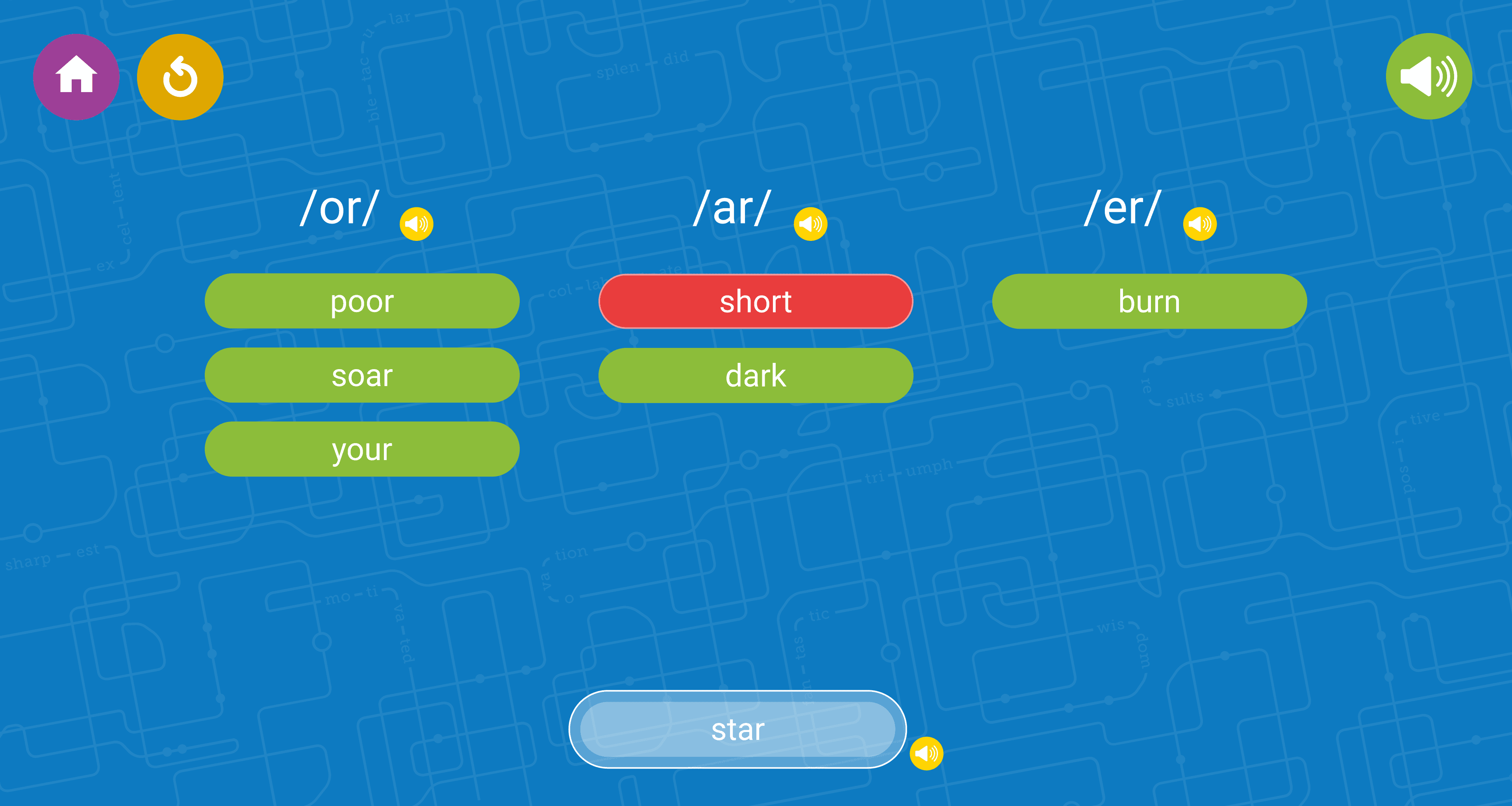
Student experience
Retry-based exercises
Self-correction
Drag-and-drop interaction
Narrative skin progression
Reward feedback
Difficulty adapted to dyslexia severity and English proficiency.


Teacher experience
Homework assignment
Game creation
Progress tracking
Per-attempt review
Error identification
Performance analysis.

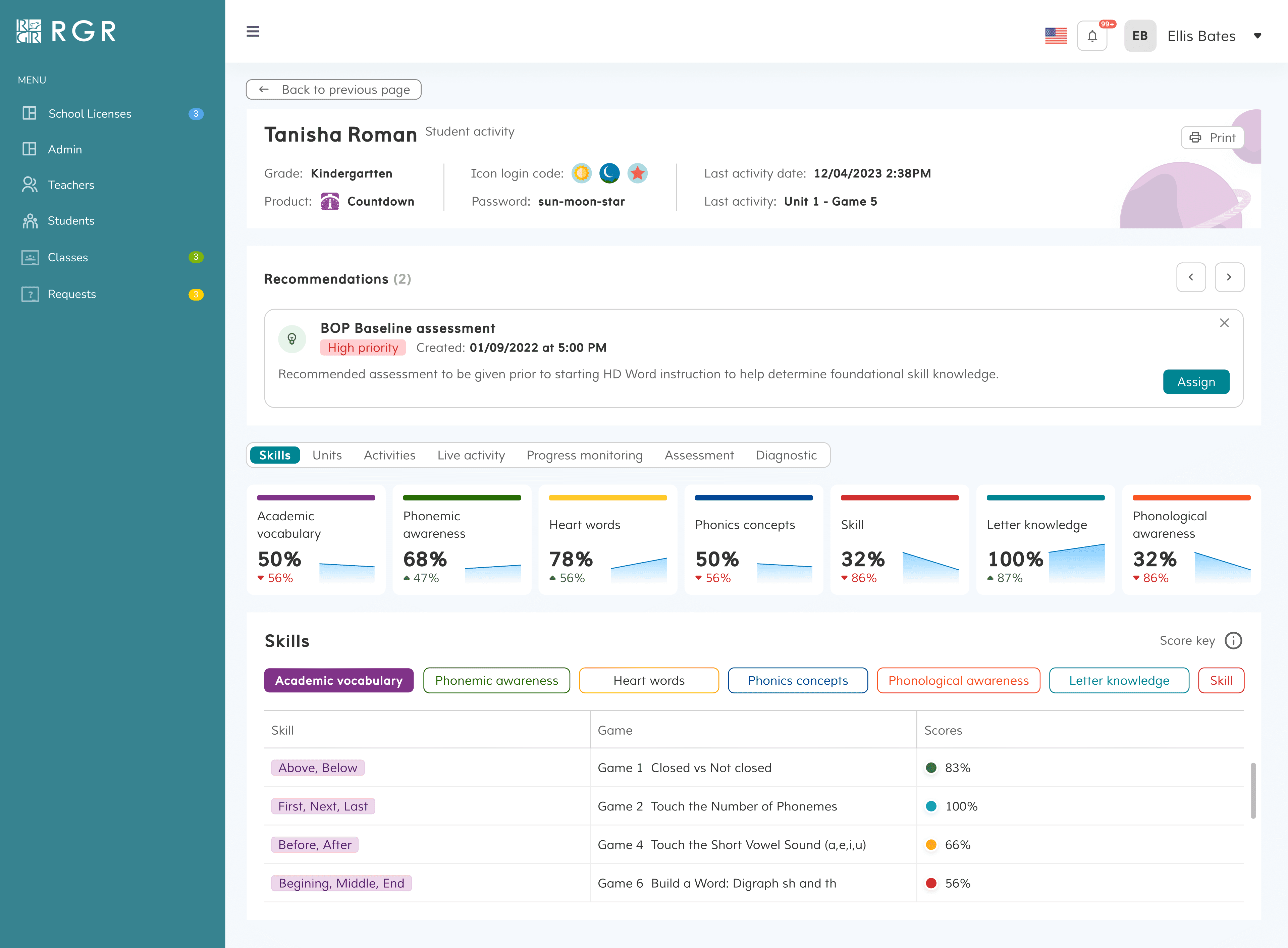
Product evolution
Hardcoded MVP → validated game mechanics → teacher/admin platform → native iOS/Android direction
08 – Outcome
Self-correction won
Self-correction outperformed auto-correction on word recall.
87% tablet usage confirmed that the original desktop-first assumption did not match actual behaviour and supported the move towards native iOS/Android.
The visual language built for the games was adopted into RGR's printed materials.
Of the schools that paused during COVID, RGR reported approximately 13% returning after the game shipped, followed by another 13–14% after the teacher platform shipped.
For a combined ~26–27% of RGR's pre-COVID school base.
Some schools did not return after moving to other systems.
What didn't work
The initial skin system did not work equally well for all learners. Feedback from girls exposed the gender gap, leading to additional options and further research.
The admin panel separated primary and secondary actions by button color alone. A colorblind stakeholder couldn't tell two buttons apart before a client call. Fixed with icons, not color. Color-vision checks are now standard, not just contrast.
Limitations
The exact method used to measure word recall and the denominator behind the school-return figures still need to be verified.

09 — Reflections
Dyslexia isn't one condition.
A pass/fail result hides how a student got to the answer. Seeing the attempt, the error, and the self-correction mattered more than the final result alone.
I'd bring teachers and students in earlier
before locking platform choice, correction behaviour, and visual progression. Some of the biggest decisions only got challenged after the first concepts were already in development.
Digital transformation isn't porting the old product to a new screen.
The strongest results came from keeping the learning principle and rejecting the mechanics that existed only because paper was the original format.