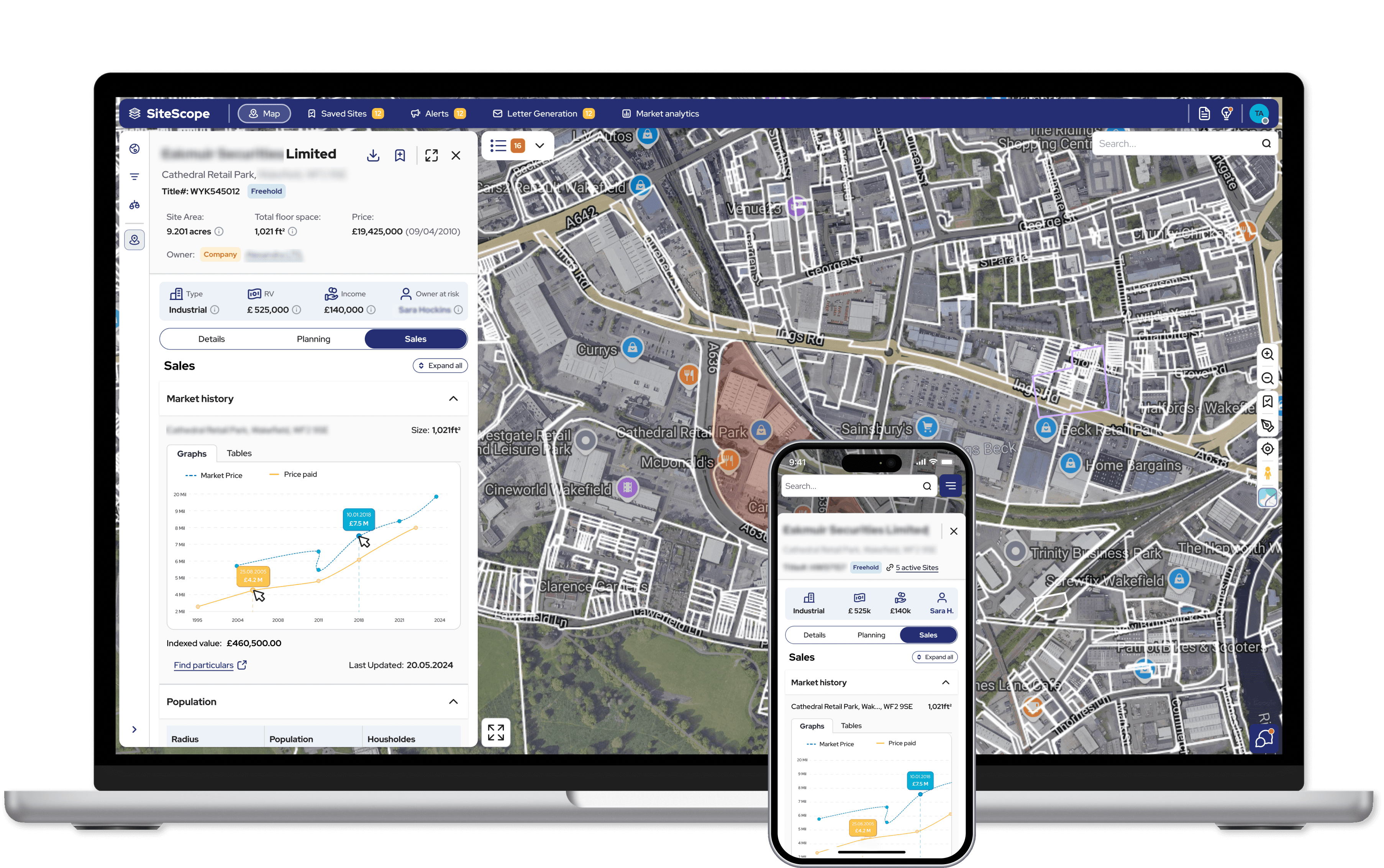
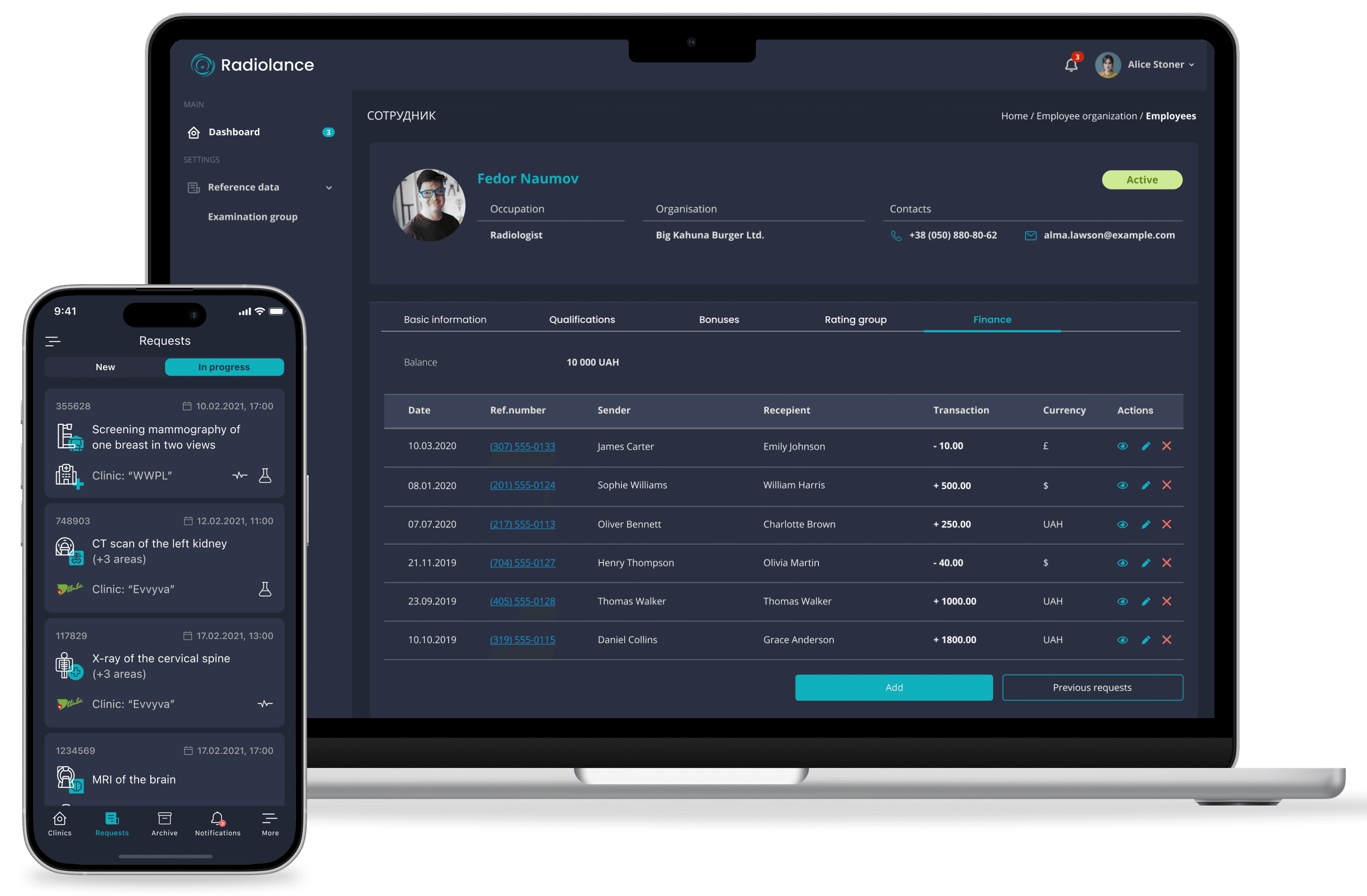
Feature design
B2B2C Healthcare
COVID-19 Response
Telemedicine
The core challenge was trust across three user types with completely different needs: patients booking remotely, clinic admins coordinating schedules, and doctors managing cases across two systems simultaneously.
01 — Business Context
Why this problem mattered now
The Gap
Two established healthcare platforms — Medstar (doctor MIS/EHR) and Medcard24 (patient portal, owned by SK-Telemed) — operated with no connection between them. Neither supported remote workflows. Patients could not consult doctors remotely, request prescriptions online, or communicate outside physical appointments. When COVID-19 lockdowns began, this became critical. Doctors were seeing 48-50 patients per 8-hour shift — around 10 minutes per patient — and regularly staying longer when complex cases demanded more time. High-risk and elderly patients could not access care safely in person, but there was no remote alternative.
Risk & Opportunity
Clinics were overloaded, doctors faced burnout, and patients delayed treatment due to safety concerns. The opportunity was to establish a telehealth ecosystem extending care beyond physical clinics.
Stakeholders
Doctors · Patients · Clinic Administrators · Product Manager · Business Analyst · Development Team
Success Metrics
Enable remote healthcare delivery at scale — measured through adoption of remote consultations, reduction of offline visits, improved accessibility, and supporting doctors under lockdown conditions.
The business needed telemedicine delivered quickly to keep services operational during lockdowns. Users needed accessibility regardless of age, technical literacy, or device limitations. Early assumptions favoured video consultations, but research revealed many patients lacked webcams and elderly users struggled with video technology.
Lockdowns made in-person care dangerous and unsustainable. Doctors were seeing over 150 patients a day with no remote alternative. Patients stayed home and went without care. The system needed a digital escape route, fast.
Doctor Burnout Risk
Unsustainable patient volume with no way to reduce in-person load
No Remote Option
The platform had no consultation flow outside physical visits
Elderly Patients Stranded
High-risk patients couldn't safely access care
Zero Scheduling Infrastructure
No digital way to manage or redistribute appointment load
02 — Problem Space
The problem we were solving
The Business Problem
Medstar and Medcard24 operated as separate systems with no integrated telehealth infrastructure. Neither platform supported remote consultations, online appointment booking, prescription requests, or doctor-patient communication outside clinic visits.
The User Problem
Patients could not access healthcare remotely, request prescriptions online, communicate with doctors between appointments, or monitor their health over time. Doctors had no way to reduce in-person workload, conduct remote consultations, or manage increasing patient demand efficiently.
What We Assumed
The obvious solution was video consultations. But we didn't know whether video would actually work for the people who needed remote care most.
What We Didn't Know
We lacked data about patient technology access, consultation preferences, adoption barriers, the needs of elderly users, and how doctors would adapt to telemedicine workflows under crisis conditions.
What Proved Wrong
A large proportion of patients did not have webcams — a video-first experience would exclude many users who needed remote healthcare most.
"I couldn't get an appointment without calling during work hours. By the time I got through, all slots were gone."
— Maria K. · Patient, 34
— Dr. Olena V. · Family Doctor,
Kyiv clinic
"Scheduling was completely manual. Doctors were overwhelmed and I had no visibility into who was coming or when."
— Andriy S. · Clinic Administrator
A video-first experience would have excluded the patients who needed remote care most. Chat had to become a first-class channel, not a fallback.
03 — My Role
What I actually owned
Scope
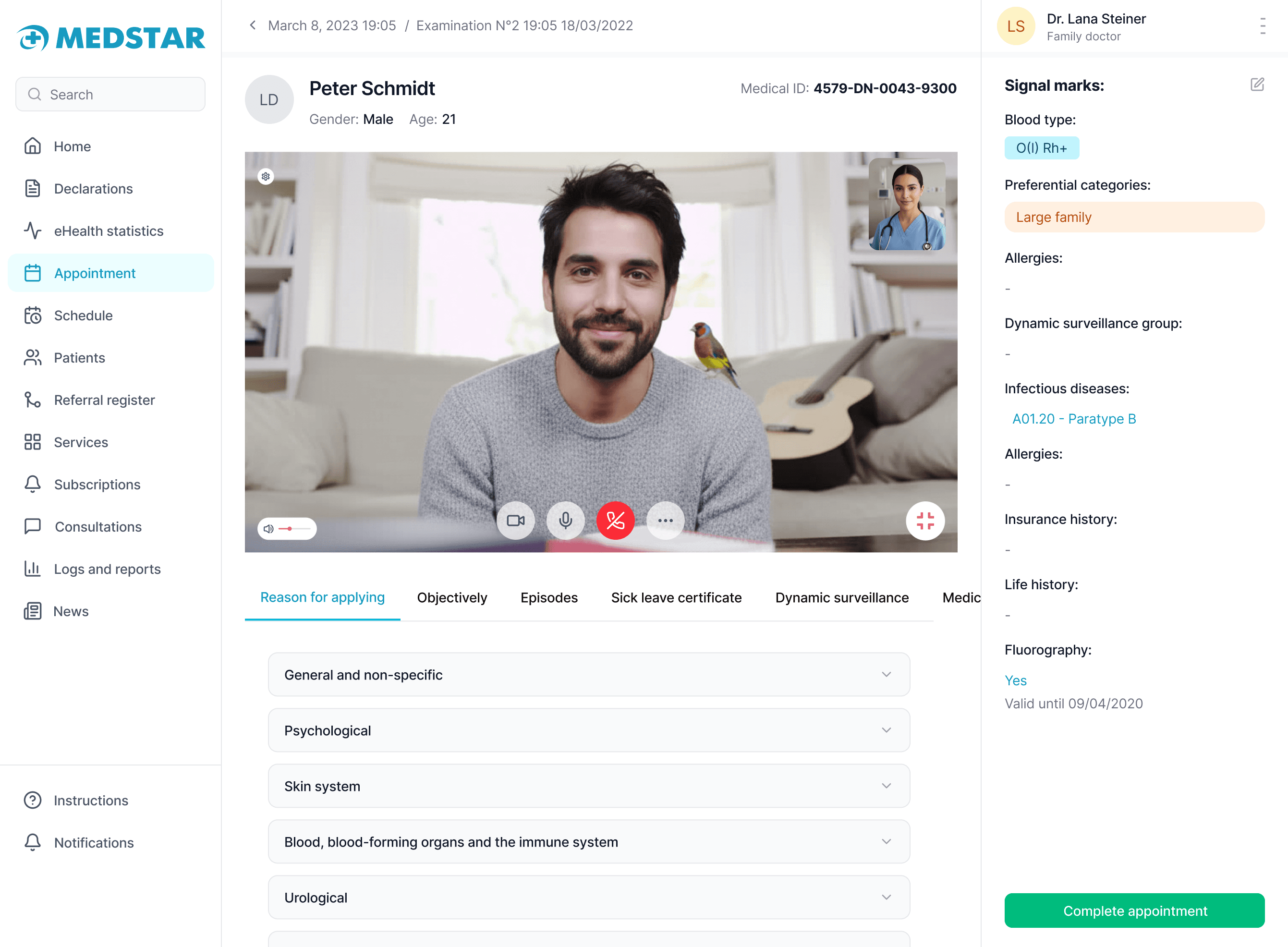
I worked as an outsourced designer through SDH, embedded across both Medstar and Medcard24. I owned the end-to-end design process: user research, information architecture, user flows, UX design, UI design, prototyping, usability testing, and developer handoff.
Collaboration
1 Product Manager · 1 Business Analyst · 4 Developers · 1 QA Engineer
Products
Medstar (doctor MIS/EHR) · Medcard24 (patient portal) · IDIS2GO (telehealth diagnostic system) · Show2Doc (doctor-to-patient communication platform)
Influence
Research changed the brief: video consultations became a connected telehealth ecosystem across patients, doctors and clinic admins. I drove that shift and pushed chat into a first-class channel.
The idea for Show2Doc emerged during the project — a dedicated doctor-to-patient communication platform that went from concept to launch in July 2020.
Timeline
Lockdown in 2020
Phase 1: March-April 2020, 6 weeks — Medstar + Medcard24 connected for telehealth
Phase 2: IDIS2GO integration — telehealth diagnostic system added
July 2020: Show2Doc launched — new product, born from research during the project
04 — Direction
What we decided to build
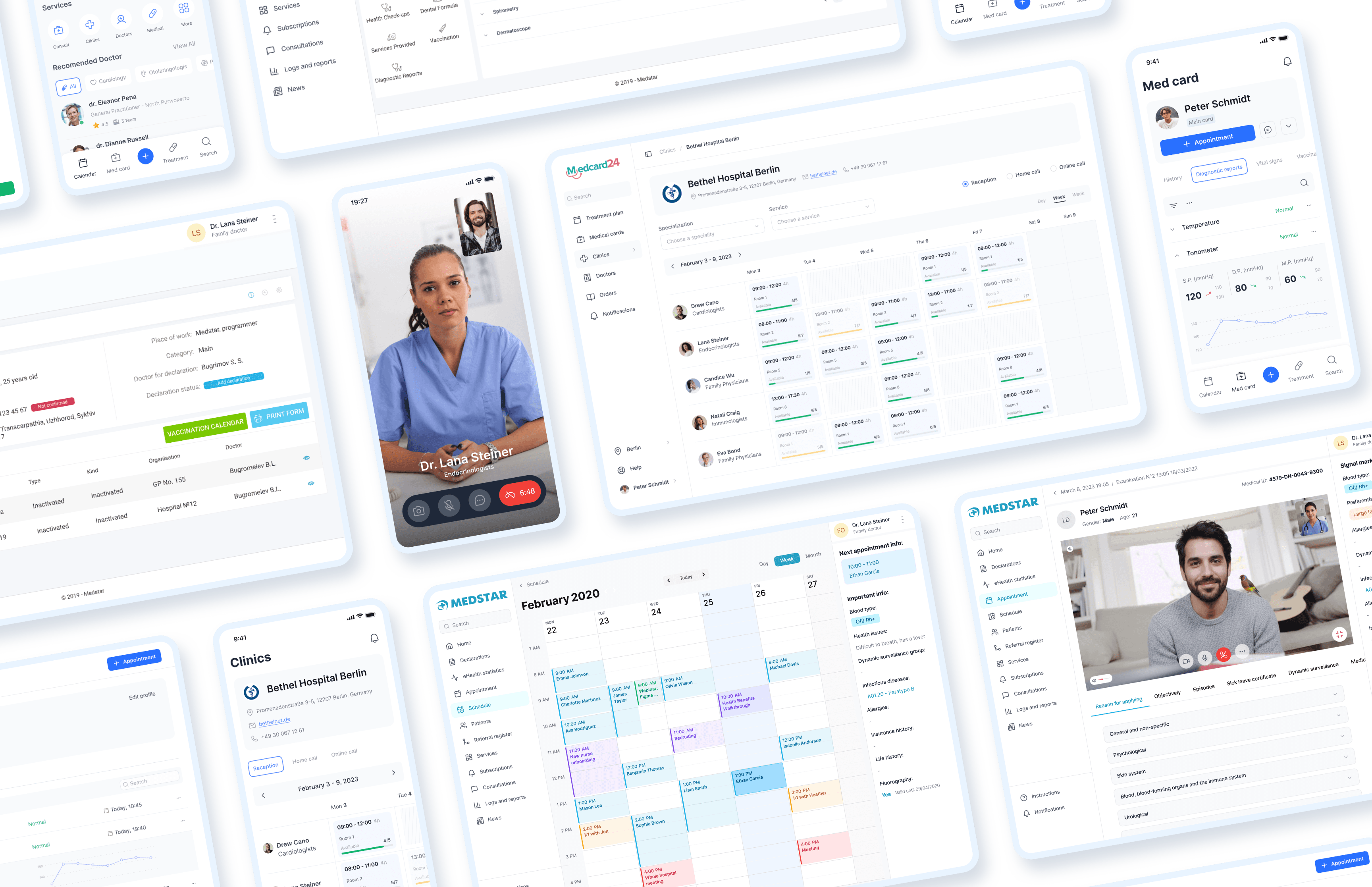
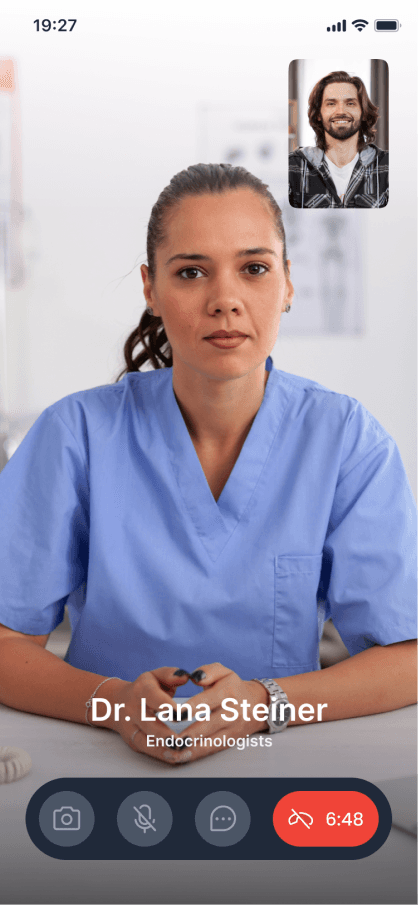
We connected Medstar and Medcard24 into a single telehealth ecosystem — allowing patients to book appointments, consult doctors remotely, request prescriptions, and manage healthcare from home, while enabling doctors and clinics to coordinate care through a connected workflow.
From booking to prescription



05 — Impact
Why this project matters
37K+
Physicians on platform
120K
Appointments/Day at peak
4.8
App Store rating
48%
reduction in offline visits
The platform evolved from disconnected healthcare tools into an integrated ecosystem, creating the foundation for future services including wellness tracking and medication delivery. Medstar covers approximately 15% of the Ukrainian EHR market.
Before
Consultations
In-person visits only · Exposure risk for everyone during lockdown
Appointment Booking
Call the clinic during working hours · Long queues, no visibility
Patient records
Paper files · No digtal access for patients or remote doctors
Doctor workload
150+ patients daily · No way to redistribute or reduce load
VS
After
Consultations
Video callor chat from home via Medcard24 app · No exposure
Appointment Booking
Book online anytime. Admin manages schedule via Medstar dashboard.
Patient records
Full EHR in-app. History, prescriptions, and treatment plans in one place.
Doctor workload
Doctor workload: Distributed across remote and in-person. Offline visits reduced by 48-51%.
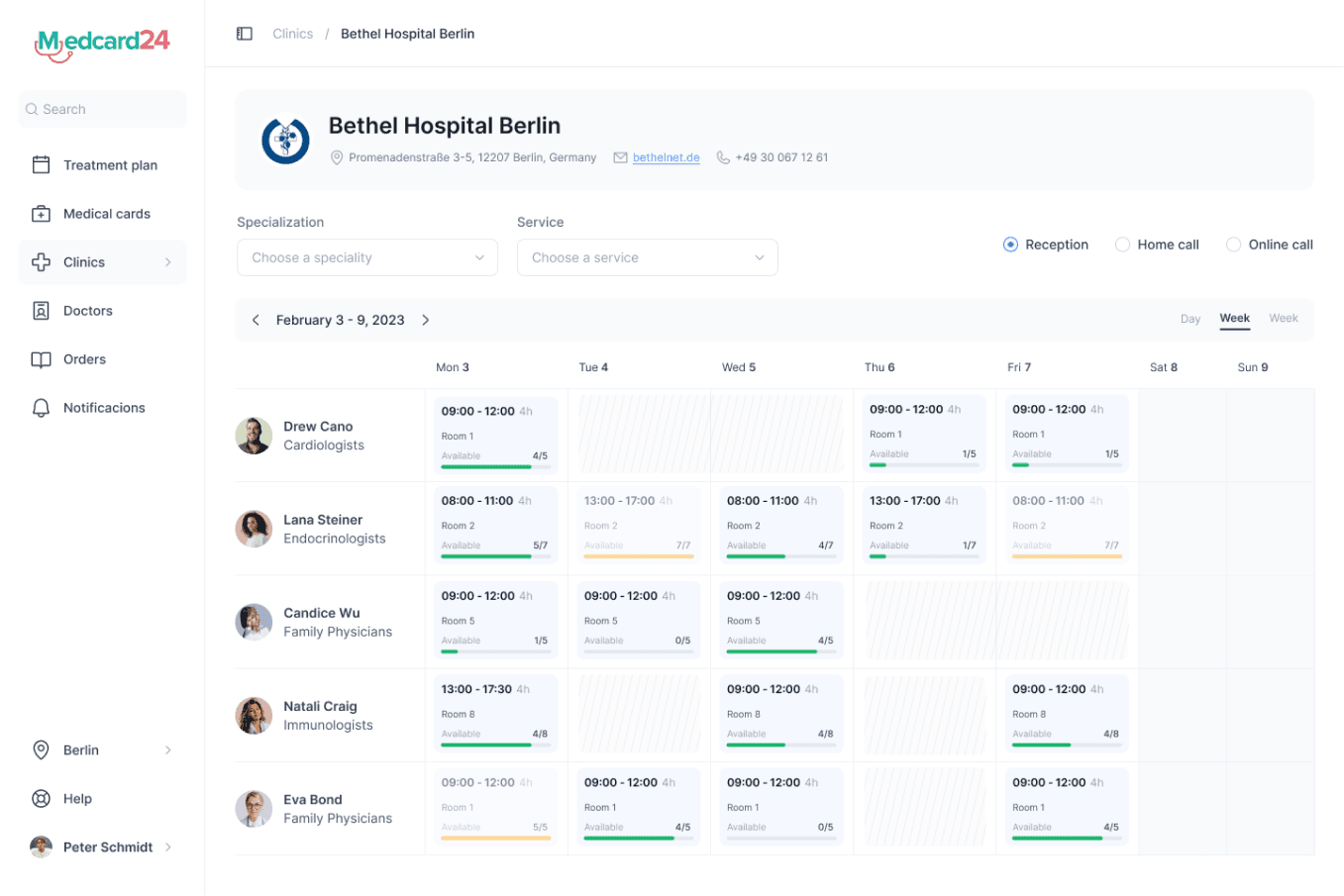
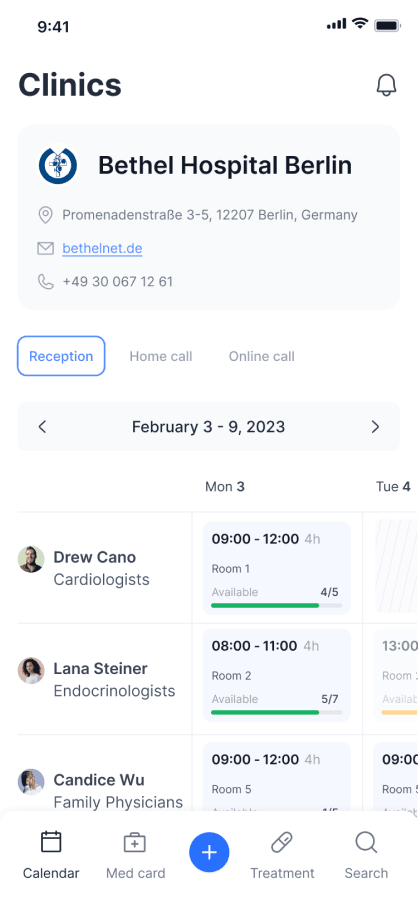
Clinics — Bethel Hospital Berlin, available booking slots. Patient-side booking infrastructure.
06 -Approach & Rational
Why this direction
Research
We interviewed 5 doctors, 3 clinic admins, and around 10 patients 4 pulling in family members wherever we could during lockdown restrictions. Alongside interviews, we ran unmoderated questionnaires so participants could answer in their own time while we used that window to design flows in parallel. No prior data existed. We started from what we could observe: GP clinics collapsing under patient load with no remote option.
Strategic Decisions
Rather than treating chat as secondary, we elevated it to a primary consultation channel alongside video. We also introduced an administrator persona after discovering that appointment coordination and workload management remained significant challenges for doctors.
Video-First Consultations
Would exclude a significant portion of patients without webcams.
Phone-Only Consultations
Lacked structured communication and healthcare documentation.
Rejected
Hybrid Model
Balanced accessibility, clinical requirements, and operational efficiency.
Selected
Research synthesis & Ideation
Mapping insights to Action
Consolidating primary clinical insights from over 40 user interviews to prioritize product features for the remote care platform launch.
Research Finding
User Need
Design Opportunity
Many patients didn't have webcams or struggled with video technology.
Access care in a way that works for them, not just video.
Offer chat consultation alongside video as an equal option.
Elderly patients needed simpler, less technical experiences.
An experience that feels easy, safe and guided.
Simplify flows with clear guidance at each step.
Doctors were overwhelmed with in-person visits and repetitive follow-ups.
Spend more time on patients who truly need in-person care.
Enable effective virtual consultations and follow-ups.
Remote care created scheduling complexity for clinics.
Coordinate availability and manage capacity smoothly.
Introduce admin tools to manage availability & confirm schedules.
Patients needed prescriptions and care continuity without visiting the clinic.
Receive prescriptions and continue care remotely.
Digital prescriptions, access to care & history in one place.
Constraints:
Delivered during active lockdowns with limited user access, no historical data, and only six weeks for Phase 1. Research, design, testing, and implementation happened in parallel. Some decisions were made on instinct and corrected in testing.
Criteria
Insight
07 -Final Solution
What ultimately shipped
Phase 1 - 6 Weeks
Online appointment booking
Video consultations
Chat consultations
Doctor-patient messaging
Prescription requests
Connected workflows between
Medstar and Medcard24
Phase 2
Wellness diary for patient health tracking
Remote monitoring of patient vitals
Medication delivery services
The resulting ecosystem supported healthcare interactions before, during, and after consultations 4 moving beyond the consultation layer into broader health management and continuity-of-care services.
A connected telehealth ecosystem
We connected the patient and clinical platforms and introduced the missing admin workflow to support the complete remote-care journey.
Patient
Find doctor
Book appointment
Video / Chat consultation
Receive prescription
Follow-up care
Medcard24
(Patient App)
Search & discover
Manage appointments
Video / Chat interface
Messages
Prescriptions
Secure data
Sync
Medstar
(Clinical Platform)
Patient records
Clinical context
Consultation outcomes
Prescriptions
Analytics
Doctors
View schedule
Consult patient
Create prescription
Follow up
Clinic Admin
Manage availability
Confirm schedules
Coordinate care
ECOSYSTEM EXPANSION
IDIS2GO (Remote Diagnostics)
Show2Doc (Doctor–Patient Communication)
Additional products I designed to extend the remote-care ecosystem.
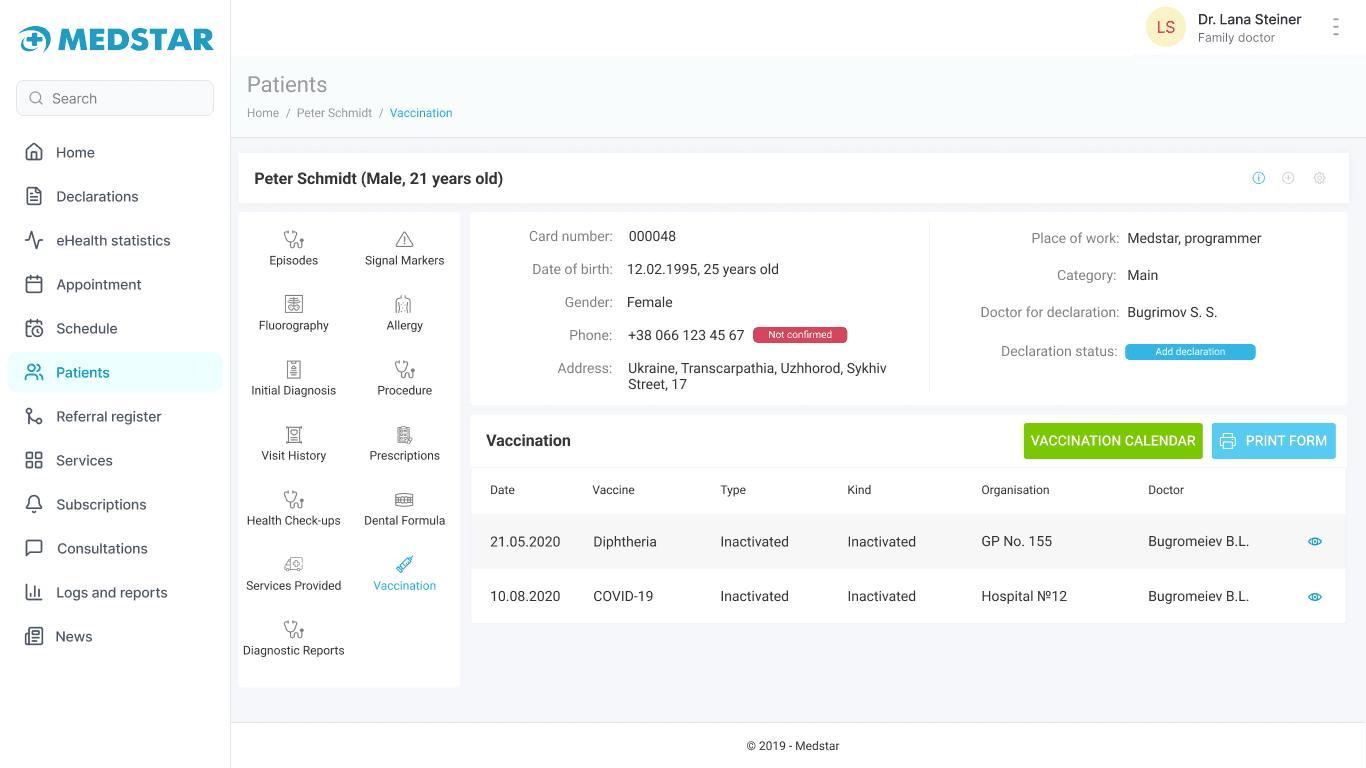
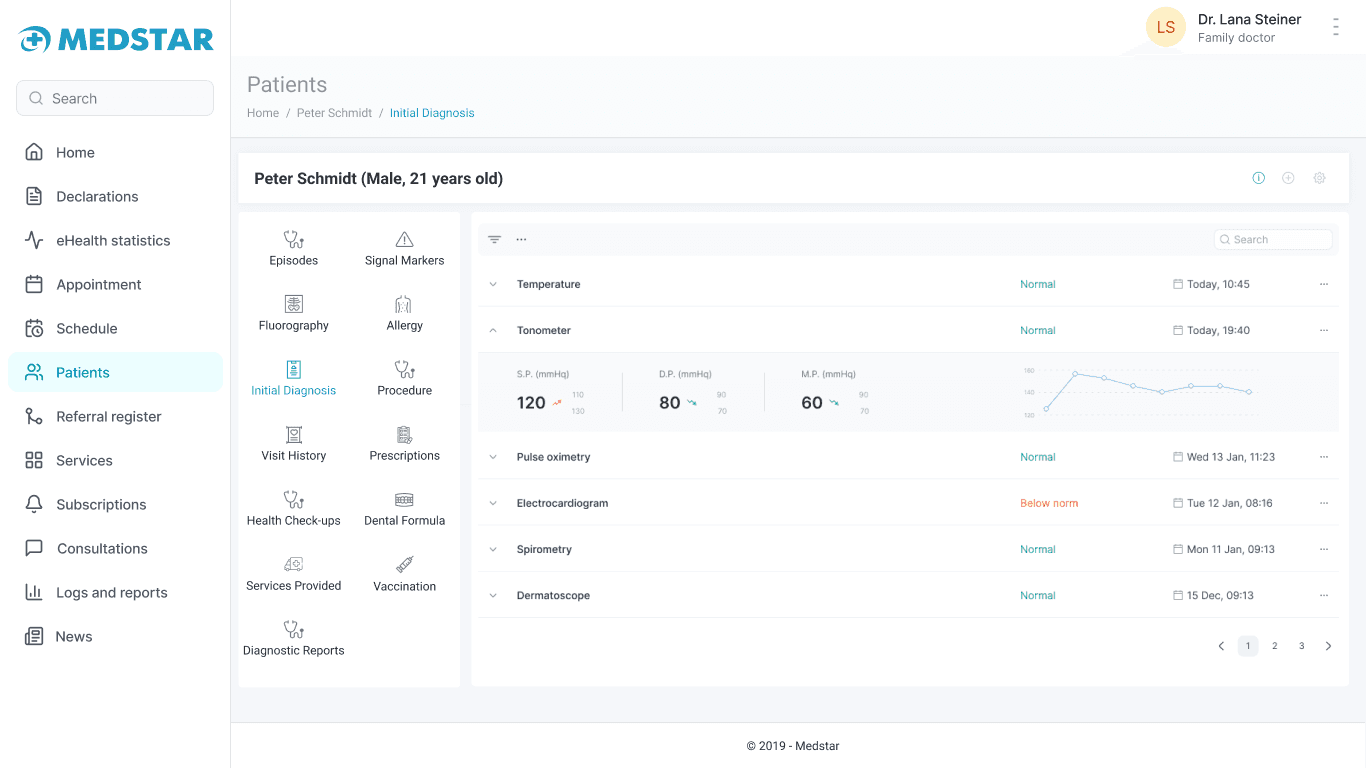
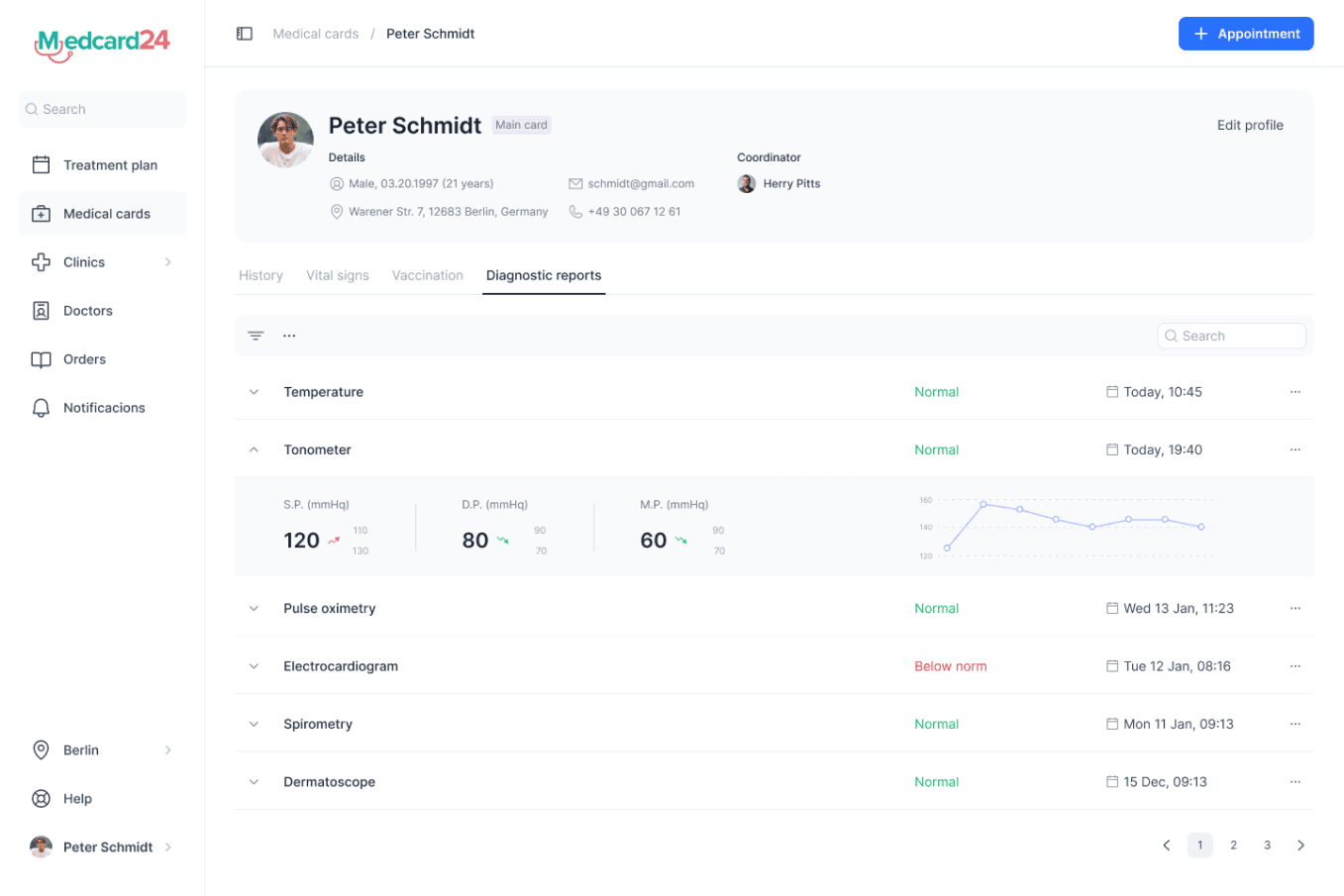
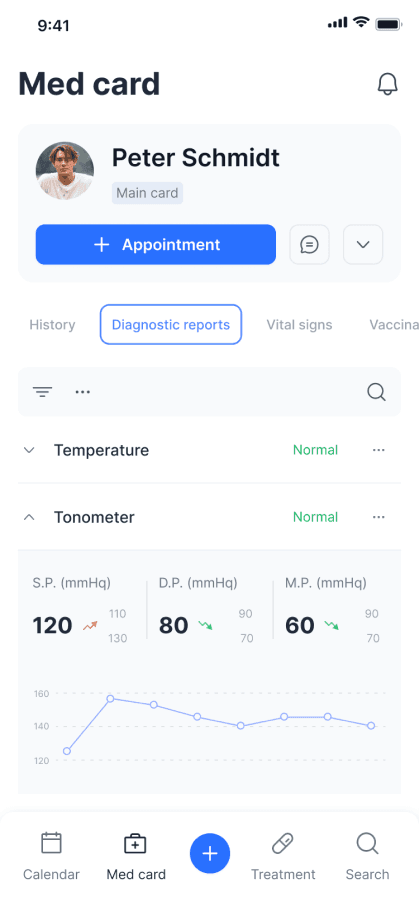
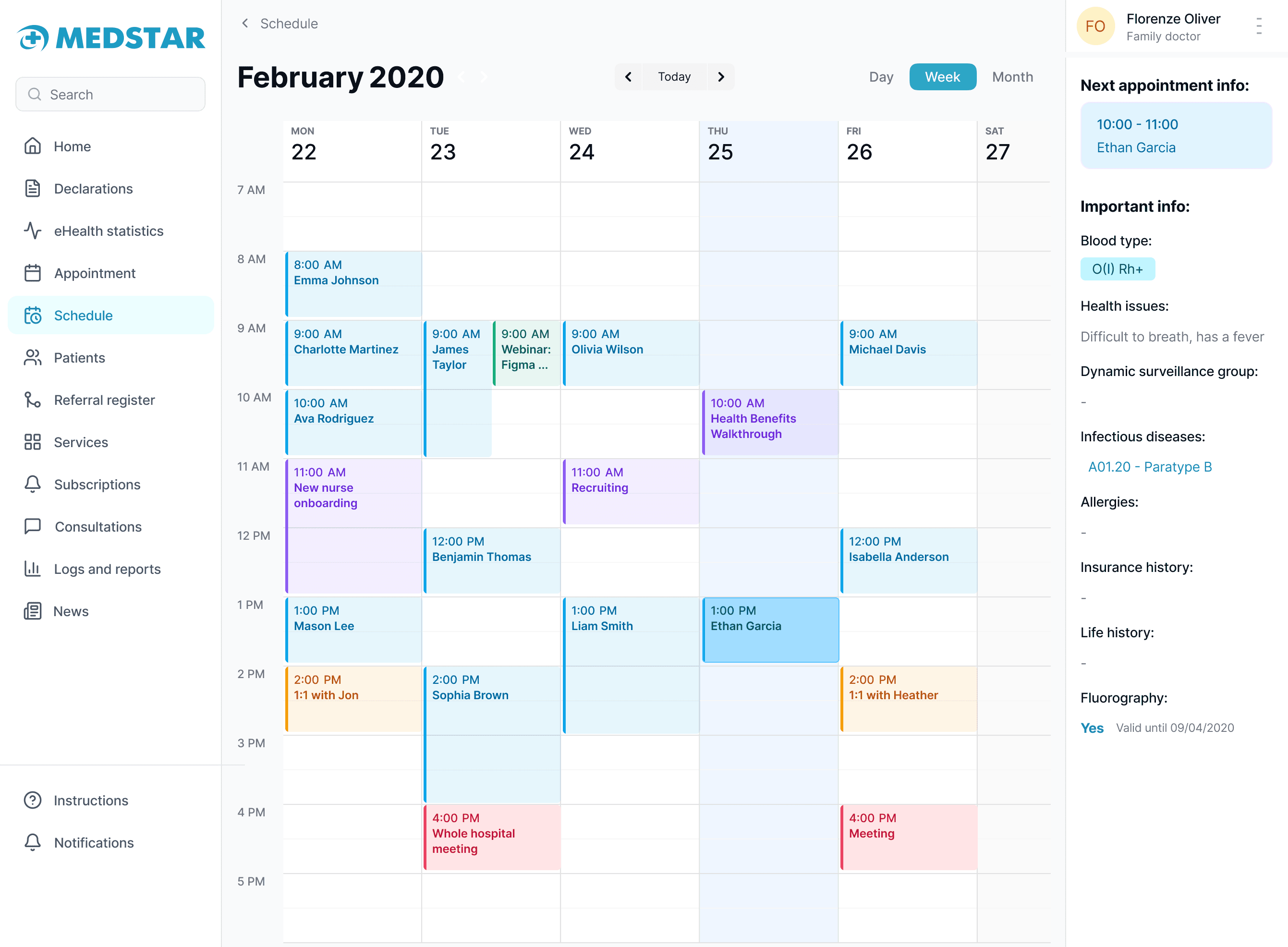
Schedule — February 2021, full week view, colour-coded appointments. Admin persona managing load.
08 - Outcome
What changed after launch
50% Reduction in offline visits
Within the first months after the scheduling and consultation flows launched, offline visits dropped by approximately 50%, demonstrating a significant shift to remote care.
Full remote care access
Patients accessed consultations, prescriptions, and medication delivery without leaving home.
Reduced clinic pressure
Doctors gained new channels for managing patient demand while reducing pressure on physical clinics.
Administrator workflows validated
Supporting doctors alone was insufficient 4 administrators became critical participants in managing healthcare delivery at scale.
What didn't go smoothly
The platform went live during active lockdown with no controlled rollout. Edge cases in the elderly flow surfaced only after launch - the phone call option worked in principle but needed clearer entry points. The admin workflow, introduced mid-project, was validated but rushed; some scheduling logic had to be corrected post-launch.
Scale Achieved
The platform scaled to 8M patients and 37K+ physicians by 2022, reaching 500K downloads on Google Play.
09 - Reflection
What I Learned
Nuance
We were designing during the same crisis we were designing for. Requirements changed rapidly, healthcare providers were under pressure, and decisions often had to be made with incomplete information. That context doesn't excuse the gaps - it explains the decisions.
What I would do differently
I would have pushed for a device audit as part of initial research, not as an afterthought. We found the webcam gap during testing - late enough that switching to a hybrid model required reworking flows already in progress. I'd also introduce administrator workflows from day one rather than mid-sprint, and invest more in the elderly access flow from the start.
Future opportunities
Better patient monitoring, chronic care management, and smarter appointment distribution systems. The consultation layer is solved - the next problem is continuity of care.
The core lesson
Telemedicine is not simply a communication problem. Effective healthcare delivery depends on a broader ecosystem: patients, doctors, administrators, scheduling systems, medical records, and operational workflows. Solving only the consultation layer would not have addressed the underlying challenges providers faced during the pandemic.